Permanent outdoor lighting can be more than a holiday feature. An eave system can provide warm-white accent light, brighter white light when visibility matters, and full-color scenes for holidays or game days. It does not replace path, step, patio, or yard lighting, so the right choice depends on where light is needed and how often each mode will be used.
Who This Decision Affects
This decision matters most to homeowners who like roofline lighting but do not want to install and remove temporary strings every year. It also matters to anyone comparing one eave system with separate products for holiday color, architectural accent, and exterior visibility.
Ask what the system should do on an ordinary Tuesday in March. If the answer includes subtle white light, scheduled scenes, or brighter illumination around the front elevation, a permanent system may earn its place throughout the year.
A homeowner who only wants a few weeks of holiday color may be better served by temporary strings. A property that needs light at steps, gates, paths, or work areas still needs fixtures chosen for those jobs.
Four Jobs a Permanent System Can Perform
Everyday architectural accent
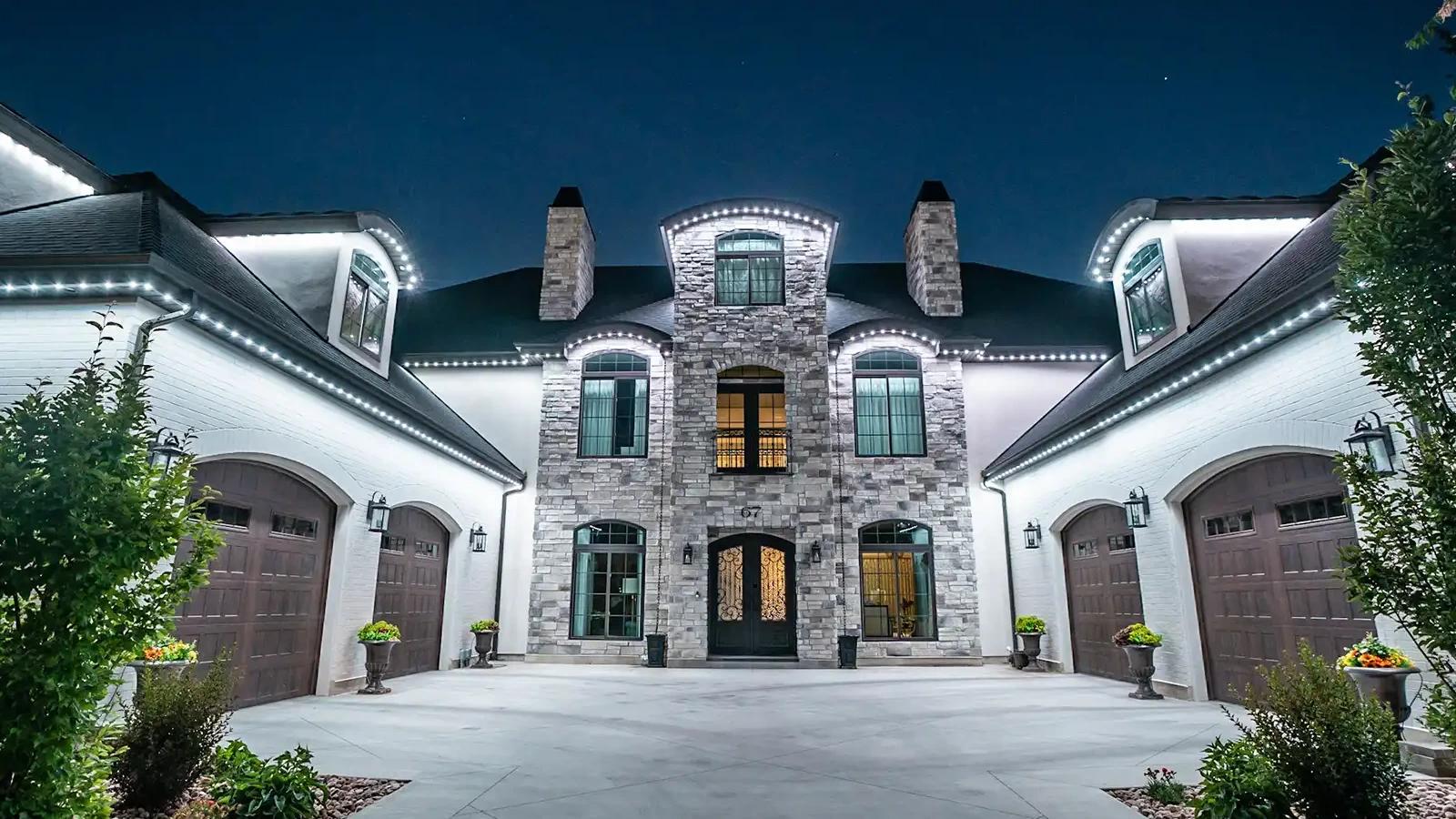
Warm-white light can trace rooflines and selected architectural features without making the home look decorated for an event. JellyFish Lighting provides adjustable white presets, including 2700K, 3000K, 3500K, 4000K, and 5000K. That range lets a homeowner compare a warmer evening look with a cooler, brighter setting instead of treating white as one fixed color.
Visibility around the front elevation
A brighter white scene can make the front of the home easier to see after dark, but it is not a security guarantee. Eave light also may not reach a step, gate latch, house number, side path, or camera view. Those locations may need dedicated fixtures.
Holiday and game-day color
Full-color scenes are why many homeowners first consider permanent lighting. The hardware stays in place, and the homeowner changes the scene instead of hanging another set of strings. Color can also be limited to selected zones.
Scheduled evening use
JellyFish supports daily schedules by time, sunrise, or sunset, with patterns assigned to selected zones. Scheduling separates a normal weeknight setting from a holiday or event scene.
Compare Four Practical Options
Option, best fit, and main tradeoff
- Temporary holiday strings: A few weeks of seasonal color, with annual setup and storage. Tradeoff: No permanent white-light function
- Permanent eave lighting: Roofline accent, scheduled white light, and color scenes in one installed system. Tradeoff: Careful placement, controls, power, and a service plan; light stays concentrated near the eaves
- Conventional exterior fixtures: Focused light at paths, steps, doors, patios, plantings, or work areas. Tradeoff: Different jobs may call for several fixture types and control zones
- Combined plan: Permanent roofline scenes plus targeted light throughout the property. Tradeoff: More coordination across brightness, color temperature, controls, and schedules
The combined plan is often the most complete, but it is not automatically the right answer. If your priority is one clean roofline and a few color scenes, eave lighting alone may be enough. If you care mainly about steps, planting, a patio, or a side yard, conventional fixtures may solve the actual problem more directly.
For a deeper look at fixtures, cable routes, control zones, and nighttime aiming, read ETG's guide to [planning outdoor lighting before the site is finished](/blog/outdoor-lighting-planning-custom-home).
Plan the Daytime Appearance and Nighttime Effect
A permanent system has to pass two reviews. During the day, look at the track, trim color, wire concealment, fasteners, and transitions around corners, peaks, gutters, and changes in roof height. JellyFish says its track lights are installed beneath the eaves in color-matched trim. Final visibility still depends on the home and installation.
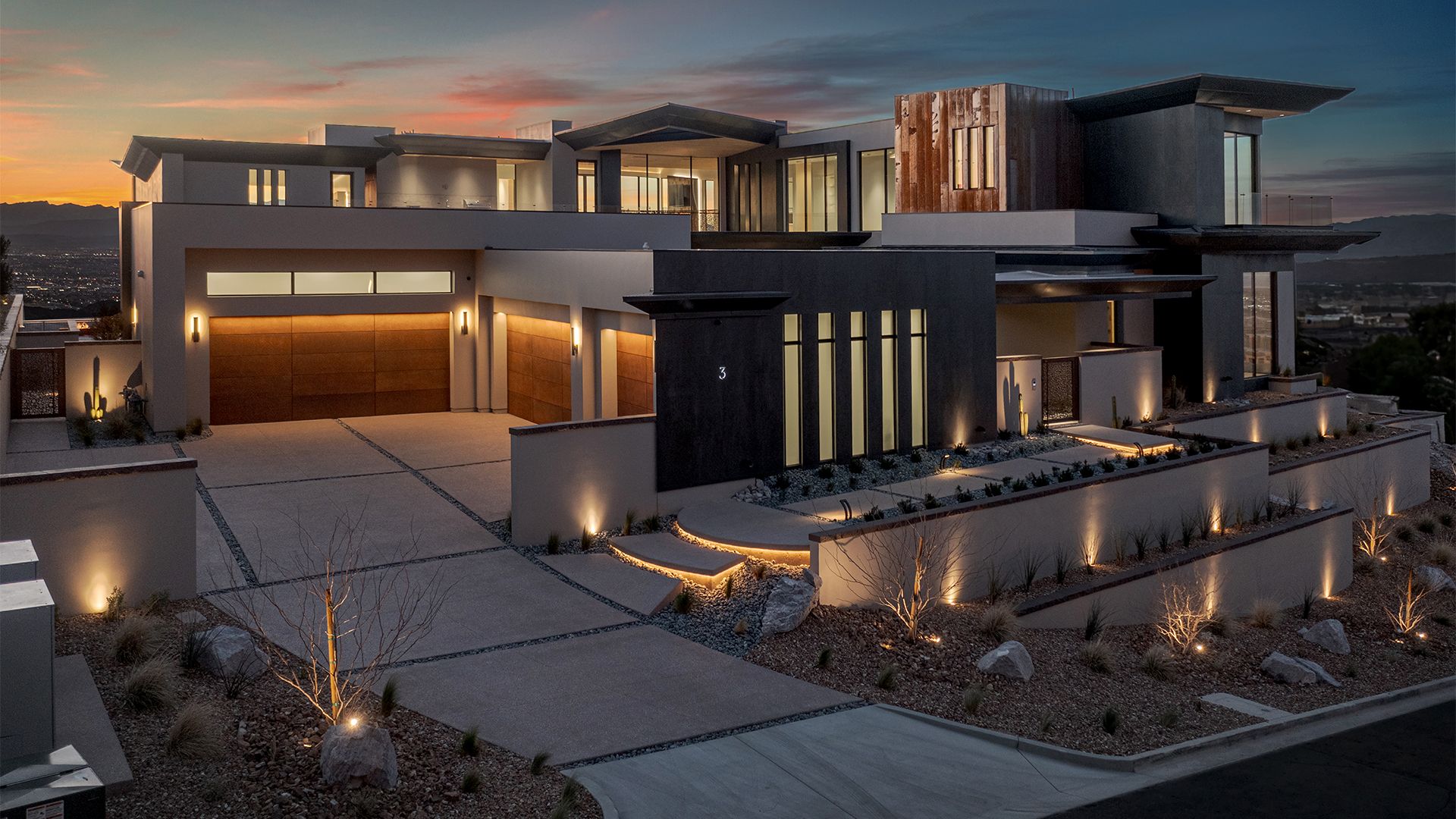
At night, judge the result from the street, driveway, front walk, major interior windows, and neighboring sightlines. Look for uneven spacing, bright points reflected in glass, light spilling where it is not useful, and scenes that compete with porch or yard fixtures. A scene that photographs well from the curb may feel too bright from a room inside the home.
Ask to review at least three real settings: a warm everyday scene, a brighter white scene, and one color scene. This separates the system's routine value from its event value.
Decide Zones, Schedules, and Control
Zones should follow the architecture and the way the property is used. The front entry, garage wings, upper peaks, rear patio, and side elevations may not need to behave as one group. A good zone plan lets the homeowner light the front elevation without turning on every eave around the home.
JellyFish documents app control plus support for Amazon Alexa, Google Home, and Control4. Treat voice control as an option, not the only control. Decide who will manage scenes, what happens when network access is unavailable, and how another household member can turn on a simple white scene.
Schedules also need ownership. Write down which scene runs on normal evenings, when it turns off, and whether holiday schedules replace or layer over the normal plan. Clear names such as Front Warm White, All Off, and Game Day are easier to live with than a long list of nearly identical presets.
Plan Power, Network, Mounting, and Service Access
Before installation, locate the controller, power supplies, network connection, cable paths, mounting track, and difficult architectural transitions.
Hide the equipment, not the access. A controller buried behind finished millwork, dense planting, or stored items can turn a routine service visit into a search. Give the homeowner a simple record of equipment locations and zone names.
Future roof, soffit, gutter, fascia, and paint work belongs in the plan too. The track may need protection or temporary removal.
Then ask a plain question: how will the team reach a failed light, damaged track section, or controller later?
Common Mistakes
Buying for December only
Holiday color may justify the initial interest, but the everyday white scene often determines whether the system feels useful for the other eleven months. Review that scene before approving the layout.
Expecting eave lights to solve every outdoor need
Roofline light does not automatically illuminate a step, path, gate, grill, table, tree, or work area. List those tasks separately and choose fixtures around the job.
Treating every elevation as one zone
One large zone can make routine operation too blunt. The homeowner may want the front on, the rear off, and upper peaks dimmer. Set those boundaries before the track is divided and documented.
Hiding equipment without leaving access
Controllers and power equipment need a clean location, but they also need to be reached. Confirm access before finishes and storage plans close around them.
Skipping the after-dark review
Daylight confirms installation details. Darkness reveals glare, reflections, uneven brightness, and conflicts with other exterior fixtures. Both reviews matter.
Pre-Estimate Checklist
Gather this information before requesting a design or estimate:
- Front, side, and rear exterior photos taken in daylight
- Photos after dark with the current exterior lights on
- The elevations and rooflines you want included
- The three scenes you expect to use most often
- Preferred everyday white appearance, from warm and subtle to cool and bright
- Areas that still need path, step, patio, planting, gate, or task lighting
- Desired zones and any elevations that should operate separately
- App, schedule, voice-control, and simple manual-control preferences
- Possible controller, power, and network locations
- Access limits at high peaks, narrow side yards, or finished soffits
- Planned roof, gutter, fascia, paint, or exterior remodeling work
- Who should receive the final zone map and service information
This list connects the estimate to actual modes, boundaries, and site conditions.
Houston Considerations
Houston's 1991-2020 climate normals at Intercontinental Airport show 51.84 inches of annual rain and summer average highs in the mid-90s. Protected equipment placement and accessible service locations deserve attention.
Review the track from the street and arrival path in full daylight, not only in a shaded sample or nighttime photograph. After dark, check whether bright white scenes reflect into windows or overpower nearby fixtures.
If roof, gutter, fascia, soffit, or exterior paint work is already planned, decide the sequence before the lighting is installed. It is easier to protect the finish and preserve access when the trades agree on the order first.
When Professional Design Is Worthwhile
Professional design is worth considering with several rooflines, high peaks, mixed materials, multiple zones, difficult equipment locations, or an existing control system. It also helps when eave lighting will be combined with path, patio, planting, or security fixtures.
A simpler choice may be enough for one accessible elevation with one main scene. Temporary strings can make sense for a short season. Dedicated fixtures are a better starting point when the need is light on a path, step, gate, table, or work area.
The goal is not to install the most lighting. It is to choose the smallest system that covers the jobs you actually care about.
How ETG Fits This Decision
Executive Technology Group is an authorized JellyFish Lighting dealer, based on owner-confirmed information. ETG can help a Houston homeowner compare permanent eave lighting with the rest of the exterior plan, define useful zones and scenes, and review how control and service access fit the home.
The broader decision is about [planning architectural and exterior lighting as one system](/lighting-and-accessories). That keeps the roofline from being treated as a separate decoration when the property also needs practical light at entries, paths, patios, and outdoor rooms.
Frequently Asked Questions
Can permanent outdoor lighting look like normal white accent lighting?
Yes. JellyFish offers adjustable white presets from warm 2700K through cooler 5000K settings. The better question is how that white light looks on your specific exterior materials and from your normal viewing positions. Review a warm everyday scene and a brighter white scene at night before treating either one as the default.
Does permanent eave lighting replace path and security lighting?
Not by itself. Eave lighting can brighten the front elevation and improve general visibility, but it may not put useful light on steps, gates, paths, house numbers, work areas, or camera views. Treat those as separate lighting jobs. A combined plan may use eave lighting for architecture and dedicated fixtures for focused tasks.
Can JellyFish lights run on a schedule or by voice?
JellyFish documents daily scheduling by time, sunrise, or sunset, plus app control and support for Amazon Alexa, Google Home, and Control4. Confirm the control path you plan to use, who will manage the account, and what simple control remains available if the network or preferred voice service is unavailable.
What should I ask before approving an installation?
Start with the scope: which elevations and zones are included? Pin down the controller and power-equipment locations, then review the track in daylight. Service access matters. Before approval, ask how corners and roof transitions will be handled, who will document the finished system, and what future roof, gutter, soffit, or paint work will require.
Next Step
If you are comparing permanent roofline lighting with a broader exterior-lighting plan, visit executive-tg.com to start a conversation with ETG. Bring daytime and nighttime photos, the elevations you want to include, and the three scenes you expect to use most. That is enough to begin a practical design conversation without committing to more lighting than the property needs.