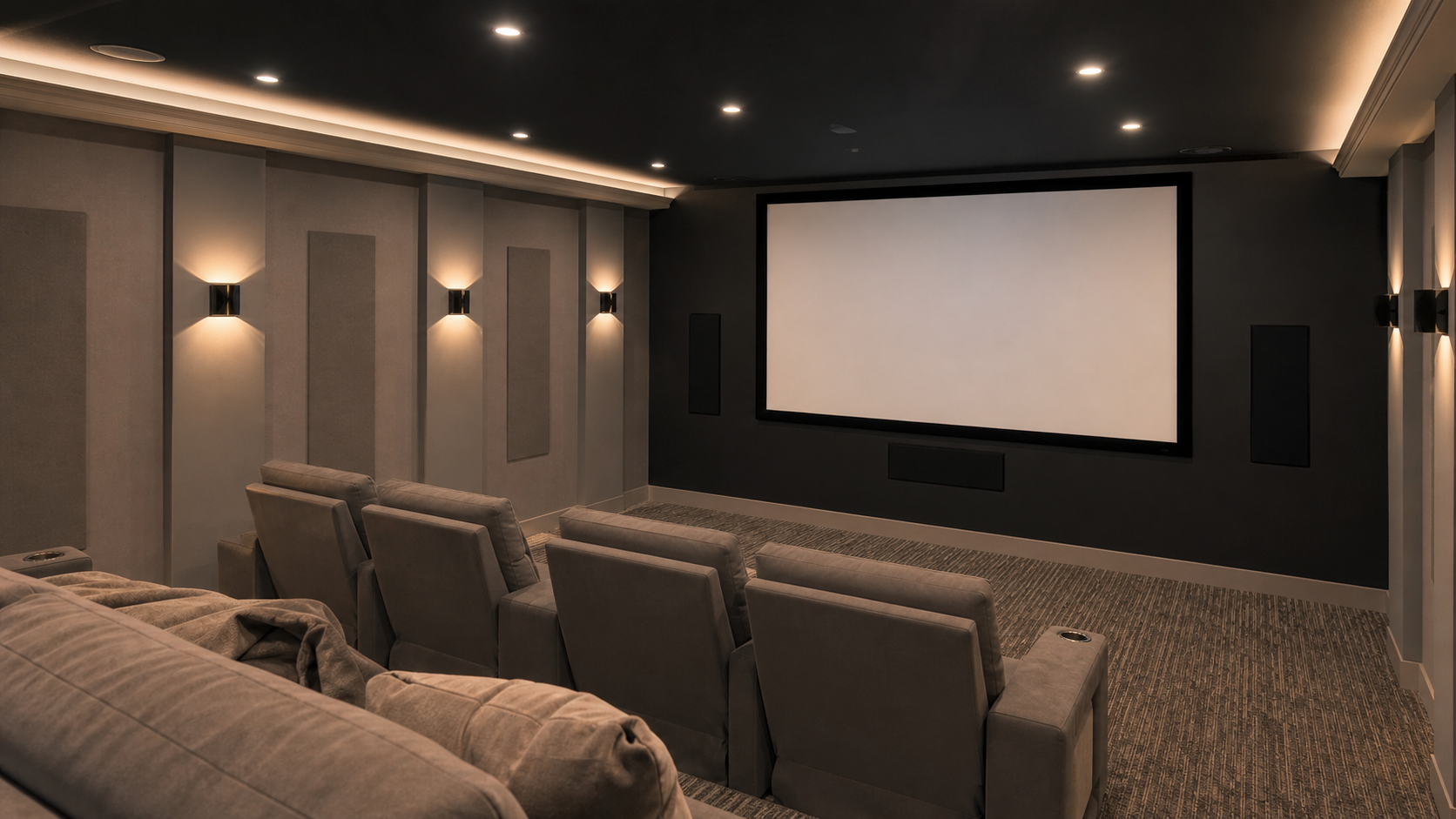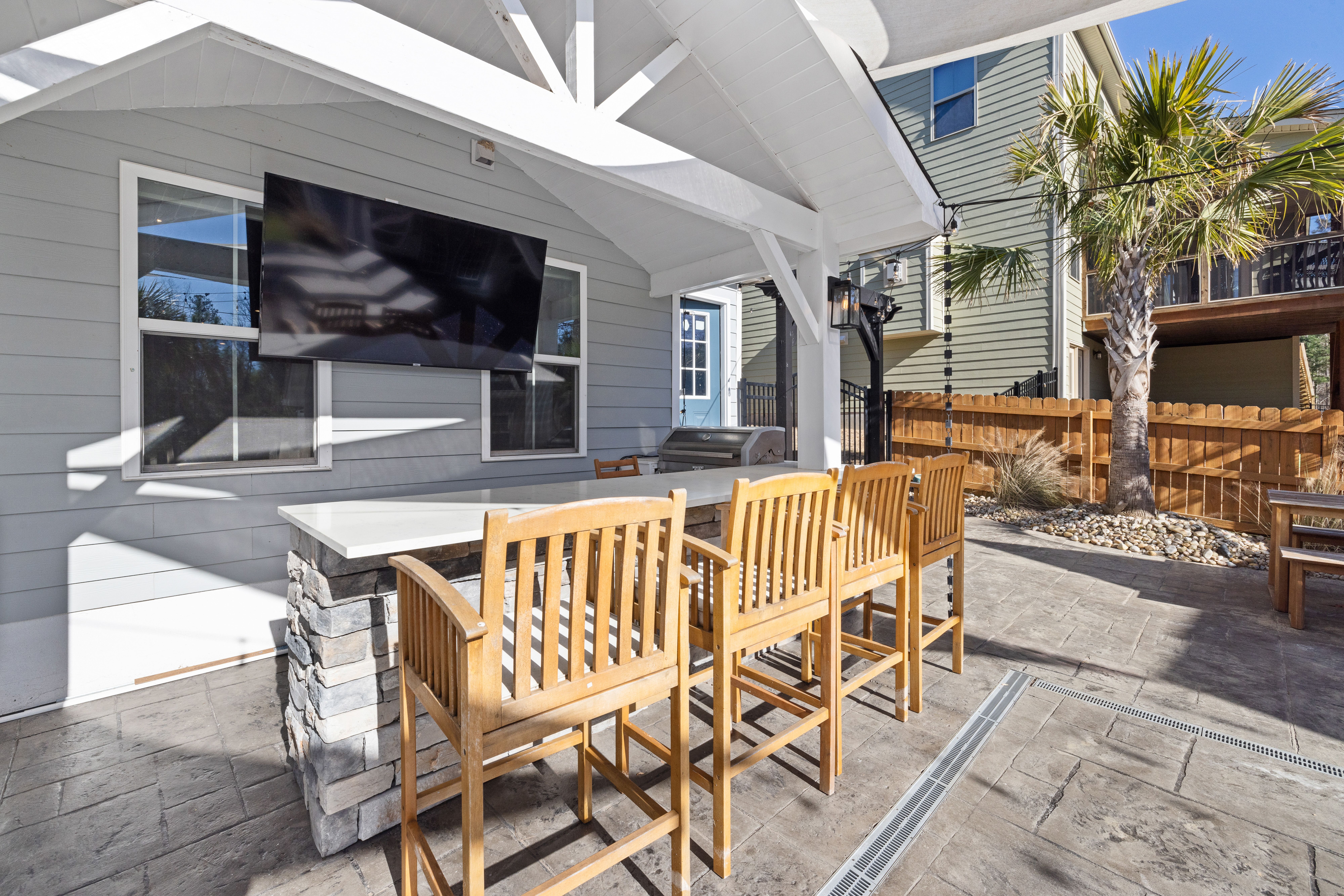
An outdoor entertainment system should be planned with the patio, pool, yard, and exterior architecture, not added after those spaces are finished. For a Houston custom home, the key decisions are the viewing and listening zones, television exposure, speaker coverage, network reach, concealed paths, power, control, and future service access.
A covered patio can look simple on an elevation while hiding a long list of coordination points. The television needs a usable sightline and a structure that can support the mount. Speakers need to cover the people in the space without sending all the sound toward the property line. Streaming and control need dependable network coverage. Wires may have to cross a slab, pool deck, planting bed, outdoor kitchen, or detached pavilion before those routes disappear.
ETG reviews the outdoor plan as one system. That keeps the finished space cleaner and gives the homeowner a better chance of getting sound, video, Wi-Fi, and control that work where people actually sit.
Map the Outdoor Living Zones
The equipment plan should follow how the property will be used. Mark the covered patio, pool edge, outdoor kitchen, dining table, fire feature, lawn, sport area, cabana, and any detached building. Then identify which zones need background music, focused listening, television viewing, independent volume, or no technology at all.
Furniture matters as much outside as it does in a media room. A television centered on an exterior wall may be off-axis from the main sofa. A speaker that looks balanced on a reflected ceiling plan may land directly above the dining table. A grill hood, fan, heater, beam, or retractable screen can take the same location that seemed open on the first drawing.
We ask for the latest furniture plan and outdoor-kitchen layout, then check them against the architectural elevations and planting plan. If the furniture is not final, temporary tape or a simple field mockup can show the television corners, expected eye line, and speaker positions before mounting blocks and cable paths are committed.
The zone map also defines control. The patio and pool may share music most days but need separate volume during a party. A lawn or sport court may need a different source from the outdoor kitchen. Those choices affect amplifier channels, speaker wiring, user controls, and programming, so they belong in the design rather than the final punch list.
Fix the TV Location Before Exterior Finishes
The right TV wall is not just the cleanest blank surface. The review covers seating angles, viewing distance, expected use time, sun direction, reflected glare, shade, wind exposure, nearby water, and traffic through the space. A location that works at noon may be difficult in the late afternoon when the homeowner is most likely to use it.
The surrounding equipment creates other constraints. Heat and smoke from a grill or fireplace, a nearby pool or irrigation zone, and an articulating mount exposed to wind all deserve attention. The selected location also needs a safe path for power and low-voltage connections without leaving cords across a countertop or exterior finish.
A covered roof does not make every television suitable for permanent outdoor use. Display makers publish different guidance for full shade, partial sun, and direct-sun conditions. The review checks the exact model instructions, exposure, operating environment, mount, cable-entry method, and service clearances before the final combination is recommended.
The TV height should be reviewed from the actual seating, not copied from an indoor living room. An outdoor bar may have standing viewers behind seated guests. A pool view may come from lounge chairs at a lower angle. If an articulating mount is proposed, the team should confirm where the screen can swing, whether the mount crosses a window or walkway, and how it returns to a secure position.
Give the Display a Support and Service Plan
Stone, stucco, siding, and outdoor cabinetry should not be expected to carry a display without a known attachment point behind them. The structural support, mount pattern, fasteners, and finish depth need to be coordinated with the architect, builder, and installer before the wall is closed.
The connection and service plan deserves its own drawing. It should show the power and low-voltage landing points, local device location, and any protected route back to the equipment rack. The cable compartment must remain reachable after mounting. There also needs to be enough working room to release the mount and replace a failed player or cable without opening stone or cabinetry.
Before the finish is approved, ETG confirms three practical points:
- A technician can reach the display inputs and local device.
- Centralized sources have a known path back to the rack.
- The proposed mount leaves real service access, not just space on paper.
The television, mount, connections, and any local device should be treated as one assembly. A neat front view is not enough if the only way to replace a player is to remove the display and dismantle the finish around it.
Design Sound for Coverage, Not Volume
Outdoor sound does not have walls to contain it. Trying to cover a large yard with one loud pair of speakers can leave the seats near the house too loud while the far edge still sounds thin. A better plan begins with the listening zones and distributes sound where people will be.
The sound design review considers the patio dimensions, ceiling height, planting and hardscape, seating, property boundaries, and desired listening level. The answer may include ceiling speakers under a roof, surface-mounted speakers on the structure, yard speakers closer to the listeners, and a subwoofer placed where it can perform without becoming a visual or service problem.
Each location has a different constraint. Ceiling speakers compete with beams, lights, fans, heaters, and drains. Wall speakers should cover the seats rather than fire at a neighboring property.
For equipment closer to the ground, the review asks:
- Will a yard speaker stay clear of mowers, edging, irrigation, and future plant growth?
- Does the subwoofer location drain well and remain reachable?
- Do the wire route, connection, and mounting detail match the exact product instructions for that exposure?
Speaker placement should be reviewed again after the planting plan is developed. A hedge, masonry wall, pool, pergola, or outdoor kitchen can change the usable locations and the way sound carries. Final tuning can correct balance and level, but it cannot fix a speaker that was buried behind a new screen wall or placed where no one sits.
Reserve Underground and Concealed Paths
Outdoor cable routes become expensive to change once concrete, pavers, pool decking, stone, and planting are complete. Each crossing is marked while the site work is still open, with sleeves or conduit coordinated where the project calls for future access.
Common routes include:
- House or technology closet to the covered patio
- Patio to pool equipment or a yard junction point
- Main house to a detached cabana, garage, or pavilion
- Outdoor kitchen to the display and speaker locations
- Planting beds to speaker, subwoofer, lighting, camera, or access-point locations
- Gate, driveway, or sport area back to the property network
Every route should have a defined origin, destination, trade owner, and installation window. A note that says “conduit to backyard” is not enough if no one knows which wall it exits, where it crosses the pool deck, or what it is meant to carry.
The path review should include irrigation, drainage, gas, pool plumbing, site lighting, tree locations, grade changes, and future structures. The electrician and low-voltage contractor can then plan their work together while keeping responsibilities and installation requirements clear. ETG does not guess at buried utilities or line-voltage work. Those decisions stay with the qualified trades and current site information.
Extend the Network Beyond the Back Door
Outdoor streaming, control, cameras, door stations, and guest devices depend on the property network. Indoor Wi-Fi may reach part of a patio, but the exterior wall, glass, distance, elevation, and finished yard can change coverage quickly.
ETG treats the outdoor area as its own network zone. The review identifies where people will use phones and tablets, where the television or music system connects, and whether a pool house, gate, or detached structure needs service. If an outdoor access point is appropriate, it needs a planned wired path, product-suitable mounting location, protected cable entry, and access for replacement.
The access-point position should not be chosen only because a wire can reach it. The location should serve the intended area without becoming a visual distraction or conflicting with roof drainage, lighting, cameras, speakers, fans, or plant growth. Coverage and roaming should be tested after the major finishes and planting are in place.
ETG's networking work includes placement, structured wiring, testing, labeling, and support. Outdoors, that same discipline keeps the patio from depending on a weak signal leaking through the nearest back window.
Decide Where Sources and Control Live
Outdoor AV can use local streaming devices, centralized sources in the technology rack, or a mix of both. The choice affects cable length, network use, remote control, heat, weather protection, and service access.
ETG reviews which services the homeowner uses, whether the outdoor display needs the same sources as indoor rooms, and how each audio zone should behave. The control experience should answer simple questions:
- How does someone turn on the patio TV and choose a source?
- Can the pool music play without turning on the patio zone?
- Can the family lower one zone without changing every speaker outside?
- What still works if internet service is down?
- Can a guest use the space without learning the whole automation system?
- Can ETG diagnose the network, source, amplifier, or control path later?
The AV system should feel straightforward in use and serviceable behind the scenes. That standard applies to a covered patio just as much as it does to an indoor media room.
Put Every Trade on One Exterior Plan
Outdoor projects often cross more drawings than one interior room. The technology review may need the architectural plan, exterior elevations, reflected ceiling plan, electrical plan, pool plan, planting plan, irrigation plan, outdoor-kitchen drawings, and furniture layout to see the complete set of conflicts.
The coordination review should include the builder, architect or designer, electrician, pool contractor, planting team, outdoor-kitchen contractor, and technology integrator. Depending on the project, lighting, shade, screen, fireplace, gate, and security teams may also need to participate.
Each drawing answers a different question. The reflected ceiling plan shows whether speakers and access points compete with lights, fans, heaters, sprinklers, cameras, beams, gutters, or retractable screens. The site plan is about routes through pools, decks, drains, planting, irrigation, gas, lighting, and future structures. Finally, the elevations bring the TV, mount, connections, speakers, finishes, and service clearances into one composition.
These reviews should happen before each surface closes, not in one meeting at the end. The decision dates may include framing, patio ceiling, exterior sheathing, stone or stucco, underground utility work, pool-deck pour, pavers, and final planting.
Walk the Site Before Access Disappears
Drawings cannot show every field condition. Before exterior ceilings, walls, decks, and yard routes close, ETG walks the site with the current plans and confirms that the proposed locations still work.
The field walk should verify:
- TV corners, viewing angles, mount structure, power, data, and cable access
- Speaker, subwoofer, and access-point positions
- Actual framing, beams, soffits, roof drainage, and finish depth
- Underground sleeves and conduit origins and destinations
- Conflicts with pool, gas, drainage, irrigation, lighting, and planting work
- Cable labels, pathway notes, and photos before concealment
- Any plan revisions made since the last coordination meeting
If a route or device has moved, the change should be marked on the same record used by the installer and programmer. Photos of open walls, ceilings, trenches, and junction points make later service far easier than relying on memory after the yard is finished.
What to Send ETG
For a useful outdoor AV review, send:
- Architectural plans and exterior elevations
- Patio and reflected ceiling plans
- Pool and planting plans
- Outdoor-kitchen and fireplace details
- Furniture layout and the main viewing or listening goals
- Intended TV, audio, streaming, and control needs
- Locations of the technology rack, internet or fiber entry, and detached structures
- Current construction schedule, including ceiling, finish, pool-deck, and planting dates
If selections are not final, send the plans anyway. ETG can identify the decisions that must be settled before the next construction gate.
Send ETG the outdoor plans, elevations, furniture layout, and construction schedule before the patio ceiling, exterior finishes, pool deck, and planting close the cable paths. Request an outdoor technology review.
FAQs
Can I use an indoor TV on a covered patio?
Do not assume a roof makes an indoor television suitable for permanent outdoor use. Review the exact display manufacturer's installation limits, temperature range, moisture exposure, sun conditions, warranty, mount, and cable-entry requirements. ETG recommends the equipment from the real location rather than from the word “covered.”
When should outdoor audio and TV wiring be planned?
Plan it before framing, patio ceilings, exterior finishes, underground utility work, pool decking, pavers, and landscaping close the routes. The exact deadline depends on the build sequence, so the technology review should be tied to the construction schedule.
Are wireless speakers enough for an outdoor living area?
Portable wireless speakers can be useful for casual listening. A permanent multi-zone system usually needs a more deliberate plan for power, network, speaker coverage, control, weather exposure, and service. ETG reviews the expected use before recommending one approach.
Does the outdoor TV need a wired network connection?
Sometimes. The choice depends on the display, streaming sources, control system, wireless coverage, and service expectations. Even with strong Wi-Fi, a planned wired path preserves options if the final equipment changes.
Can outdoor AV use the same controls as the rest of the home?
Yes, if the selected products support it. Outdoor zones still need clear independent behavior, so the family can choose the patio or pool, adjust the right volume, and recover from a source or network problem without affecting every room in the house.